Small Cap Europe is an actively managed equity fund that mainly invests in small and medium-sized companies across a range of sectors in Europe. The fund invests in companies with a market capitalisation no greater than the largest company in the fund´s benchmark index by the time of investment. The fund´s investment strategy focuses on selecting companies, where sector, region and theme analyses are important components in the strategy. The fund is managed with a long-term investment horizon and selects the companies we find attractively valued in relation to our view of the company's future earnings potential. The fund complies with Swedbank Robur’s Responsible Investment Policy and consists of share classes. Read more about this in the fund’s Information Brochure & swedbankrobur.se. Sustainability and climate work is an integrated part in our investment strategy. The fund is suitable for those who want to invest in Europe and believe in the growth opportunities in smaller companies.
ISIN
Rtn. this y
Total fee
Risk
Fund type
Morningstar Rating Total
SFDR Classification
Fact Sheet (PRIIPs KID)
Returns
Asset Manager Comment
Updated 2026-05-07Throughout April, the conflict in the Middle East between the US/Israel and Iran continued to have a significant impact on many parts of the financial markets. The ceasefire announced on 7–8 April initially caused oil price to fall, but towards the end of the month, as negotiations between the parties deteriorated, the price rose once again to near the highest levels of the year. Viewed over the month as a whole, however, the price of the main fossil fuels fell, which in turn meant relatively stable inflation expectations. Consequently, yields on government bonds with longer maturities did not change to any significant extent. Despite the highly uncertain and risky situation in the Middle East and an oil price that has risen by over 80% in a year, global stock markets rose across the board. The main reason was strong Q1 corporate results. One of the strongest segments of the market was the US Nasdaq, where large IT companies carry significant weight and the index recorded a rise of over 15%. In Europe, too, most stock market indices rose, albeit at a much more moderate pace and driven primarily by companies active in sectors such as semiconductors and electrification. During the month, the Small Cap Europe fund rose in value in absolute terms and outperformed its benchmark index. The main positive contributor to the fund’s performance in absolute terms was the Dutch consultancy Arcadis. At the end of the month, the company released a quarterly report which was very well received by the market, and the share price rose by double digits. The Austrian bank BAWAG also contributed positively to the fund’s performance, and a well-received quarterly report caused the share price to continue rising. Among the negative contributors to the fund’s performance was the Finnish company Valmet. The Q1 report was weaker than expected, particularly regarding new orders, and the share price fell. In April, Instalco AB was added to the portfolio. The company operates primarily in the installation of plumbing, electrical and ventilation solutions.
Management
Managed the fund since
2026-02-01
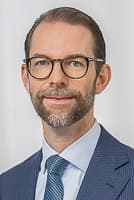
Robert Slorach
Robert Slorach manages Swedbank Robur New Energy and Small Cap Europe. He has extensive experience of asset management with over 20 years in the industry and joined Swedbank Robur in 2020.

Experience and education
Robert is also head of the global equities team since 2025. He has previously worked as a portfolio manager at Första AP-fonden (2018–2020). Prior to this he worked as an equity analyst at Handelsbanken Capital Markets (2016–2018) and Brummer & Partners (1999–2016).

Robert has an M. Sc. in Economics & Business from Stockholm School of Economics (1994–1999).
Assistant manager
Managed the fund since
2026-05-25
Sofia Sörling
Sofia Sörling is assistant portfolio manager of Swedbank Robur Small Cap Europe. She has an education in finance and joined Swedbank Robur in 2026.

Experience and education
She has previously worked as an equity research analyst at DNB Carnegie with focus on small cap in the engineering sector (2021-2026). Prior to that, she worked with corporate development and transactions at Accenture (2019-2021) and with risk management at Lannebo Fonder (2017-2019).

Sofia has a B.Sc. in Business and Economics (2014-2017) and an M.Sc. in Accounting and Finance (2017-2019) from Uppsala University. She has also done an exchange semester with a financial focus at the University of Alberta (2018).
Global/Europe team
The team is responsible for our actively managed equity funds and invests both in small companies and major corporations in the majority of the markets around the world. The fund managers possess extensive knowledge of the various markets and closely monitor developments, both from the office and through site visits. The fund managers are responsible for their individual funds, and are supported by the fund management organisation, sustainability analysts and corporate governance specialists. The team consists of twelve portfolio managers who maintain close dialogues with the companies in which they invest, thereby enabling them to influence the companies in a sustainable direction.
Active equity funds
The actively managed equity funds apply an investment strategy based on analysis of fundamentals. The focus is on the selection of companies, but sector, regional and thematic analyses are also key components of the strategy. The fund managers strive through active management to attain a return that exceeds the average return in the markets where the funds invest, in other words, a return that exceeds the fund’s benchmark index. Our fund managers integrate sustainability as a natural component of the funds’ investment processes.
Region
Updated: 30/04/2026
Industry
Updated: 30/04/2026
Largest holdings
Updated: 30/04/2026
Fees
Total fee
1.44 %
Ongoing costs
Of which
Management fee
Transaction costs
Performance based fee
Risk
Risk (SRI)
4 / 7Sharpe ratio 2 y
Standard Deviation 2 y
Active risk 2 y
Fund Facts
Management Company
Share Class
Dividend
ISIN
Base Currency
Share Class Currency
Start date
NAV-price
Asset Under Management
Type
Legal seat
UCITS
Benchmark
NAV Update
PPM-number
Morningstar Rating Total
Sustainability
SFDR Classification
CO₂
Sustainable bonds
Exclusion level
ESG rating
Sustainable Finance Disclosures
Summary
This financial product promotes environmental or social characteristics, but does not have a sustainable investment objective. However, the fund will have a minimum share of sustainable investments.

The fund analyses how the sustainable investments affect such things as emissions, water and biodiversity on an ongoing basis. The fund also ensures that the holdings do not seriously and systematically infringe on accepted international standards and conventions relating to sustainability as adopted by the UN, ILO and OECD or are otherwise involved in unacceptable operations relating to sustainability or corporate governance.

External suppliers will provide Swedbank Robur with an analysis of which companies can be associated with violations of international norms. Based on information from our suppliers and other available information, Swedbank Robur will make its own assessment on whether it is a question of a serious and systematic violation. If such a violation is deemed to occur, the company's securities are not a sustainable investment.

The fund promotes low emissions of carbon dioxide, a net zero target, business strategies that include the UN Global Goals (SDGs), an environmentally more sustainable approach by the activities of companies through Environmental Engagement (E) and an increased social responsibility on the part of companies through Social Engagement (S).

Sustainability and climate work constitute an integrated part of the investment strategy in order to manage sustainability and climate risks and to promote environmental and social characteristics. The fund is obligated to follow the Management Company’s "Policy for Responsible Investments" (adopted by the Board) and uses three overarching methods ("include", "exclude" and "engage") in order to achieve the environmental and social characteristics promoted by the fund. The fund follows the Management Company’s "Principles for Shareholder Engagement" (adopted by the Board). As an active owner, the aim of Swedbank Robur is that the companies we invest in are managed in an efficient and long-term sustainable manner.

There are plans for at least 80% of the fund's assets to consist of investments aligned with environmental or social characteristics, of which at least 5% will be sustainable investments.

The Management Company’s risk function monitors and checks that the environmental or social characteristics that the fund promotes are complied with. The risk function also performs a quarterly follow-up and analysis of the metrics the Management Company has selected to measure how the fund’s investments promote environmental or social characteristics.

In order to measure the attainment of the environmental and social characteristics that the fund promotes, the sustainability indicators weighted average carbon dioxide intensity, net zero target, SDG aligned revenues, Environmental Engagement (E) and Social Engagement (S) are used.

Swedbank Robur uses several sources in its process to measure how funds promote environmental and social characteristics. Swedbank Robur purchases data from major data providers that have demonstrated a robust method for guaranteeing the quality of data. In order to guarantee the quality of the data purchased, the supplier's data and product range are reviewed. When there is an opportunity, test data is taken from several providers offering the same product in order to compare as large a selection as possible.

There are a number of limitations with the models and data being currently used. The main limitation is the number of asset allocations for which metric calculation methods exist. The coverage is generally good for the funds, where a mix between reported and estimated data is used. Furthermore, Swedbank Robur believes that the method used by the data provider for estimating data is reliable.

The Management Company has due diligence procedures in place in order to ensure that sustainability risks and the sustainability requirements established for the fund are taken into consideration in the investment decision. Sustainability analysis is an integrated part of the fund management’s investment process. In order to manage sustainability risks and integrate the risks in investment decisions, the fund management follows the procedures that the Management Company describes in the Management Company’s "Strategy to include" and "Strategy to exclude". The Management Company’s risk function performs a daily inspection to determine whether the fund’s holdings fulfil its sustainability requirements and regulations regarding exclusion.

The fund follows the Management Company's "Principles for Shareholder Engagement" (adopted by the Board). In the event of sustainability-related controversies in invested companies, Swedbank Robur has special procedures and processes to monitor and follow up with the company. Both dialogue work and voting are key tools to try to prevent and respond to sustainability-related controversies.