Global Impact is an actively managed equity fund with a quantitative approach that invests in companies across a range of sectors worldwide, including emerging markets, that, in the fund management company’s view, provide products, services and activities that contribute to achieving the 17 UN Sustainable Development Goals. The goals are aimed at ending extreme poverty, reducing world inequalities, resolve the climate crisis and promote peace and justice by 2030. The fund complies with Swedbank Robur’s Policy for Responsible Investment and applies an extended exclusion level. Read more in the fund’s Information Brochure and swedbankrobur.se. The fund has sustainable investment as its objective and is classified as an article 9 fund according to Sustainable Finance Disclosure Regulation (SFDR). The fund consists of share classes, for more information see the Information Brochure.
ISIN
Rtn. this y
Total fee
Risk
Fund type
Morningstar Rating Total
SFDR Classification
Fact Sheet (PRIIPs KID)
Returns
Asset Manager Comment
Updated 2026-06-08The fund performed well during the month and also significantly outperformed the market as a whole (MSCI ACWI).
The fund invests in four themes: Climate, Natural Resources, Basic Needs, and Enabling. The Climate and Basic Needs themes generated positive returns during the month, while Natural Resources and Enabling generated negative returns.
The Climate sector performed the strongest, with the sub-sectors Energy Efficiency and Renewable Energy making the largest contributions. The US semiconductor companies Advanced Micro Devices and Micron Technology performed strongly, driven by continued tailwinds from the AI boom. Micron’s share price surged at the end of the month after UBS more than tripled its target price, corresponding to a potential market capitalisation of $1.8 trillion. A positive contribution also came from IBM (energy-efficient IT solutions), whose share price rose after the Trump administration announced a $2 billion investment in companies active in quantum computing, half of which was allocated to IBM. Further positive contributions came from the US solar energy companies First Solar and Enphase Energy. The rise was driven, among other things, by expectations that the Trump administration will shortly introduce tariffs on solar energy products and a floor on import prices. Such a decision would benefit domestic players.
Overall, the negative contributions were limited and were clearly offset by the positive performance of the fund’s other holdings.
Management
Managed the fund since
2018-05-29
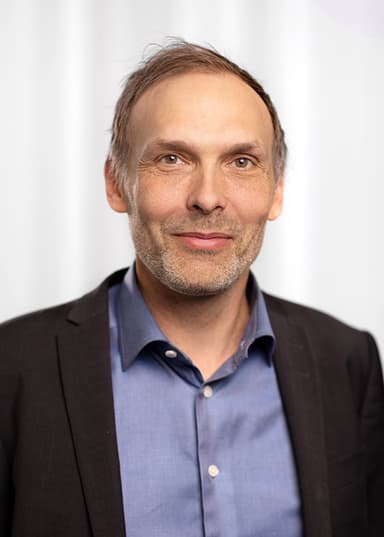
David Stenlund
David Stenlund manages Swedbank Robur Climate Impact, Global Impact, Humanfond and Transfer funds. He has extensive experience of quant asset management and joined Swedbank Robur in 2003.

Experience and education
His track record includes managing Swedbank Robur Bas 25 and Bas 75 (2007–2017), Bas 50 (2012–2017), Bas Ränta (2014–2015), Bas 100 (2014–2017), Mixfond Pension, Stiftelsefond and KPA Etisk Blandfond 2 (2011–2017) and Dynamic (2014–2017).

David has been head of the quant asset management department at Swedbank Robur since 2017. He has also worked as chief analyst for Multi Asset (2012–2017) and as a quantitative analyst (2006–2007) and risk manager (2003–2006) at Swedbank Robur.

He holds an M.Sc. in Industrial Engineering/Financial Mathematics from Lund University, Faculty of Engineering (1998–2003) and an M.Sc. in Economics from Lund University.
Managed the fund since
2018-05-29
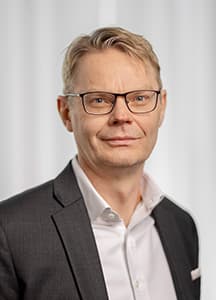
Johan Eriksson
Johan Eriksson manages the Swedbank Robur Climate Impact, Global Impact, Humanfond, Aktiefond Pension, Mixfond Pension and Transfer funds. He has many years of fund management experience and joined Swedbank Robur in 2007.

Experience and education
He has previously managed Swedbank Robur Ethica Global (2007–2010), Globalfond (2007–2013), Folksam LO Världen (2007–2015), Aktie Hedge, Global High Dividend, Talenten Aktiefond MEGA, KPA Etisk Aktiefond, Förbundsfond and the Access funds (2013–2015). He has also worked as a quantitative analyst at SEB Asset Management (2006–2007) and prior to that as a consultant at VPD Financial Software Consulting (1997–2006).

Johan has a B.Sc. in Business Administration and Economics from Uppsala University (1993–1997).
Managed the fund since
2022-03-07
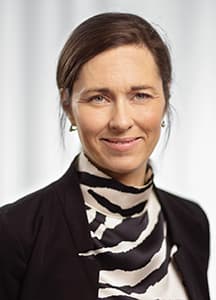
Linnea Zanetti
Linnea Zanetti manages the Swedbank Robur Access Edge, Climate Impact, Global Impact and Humanfonden. She has an M.Sc. Economics and Business and joined Swedbank Robur in 2011.

Experience and education
She has previously managed Swedbank Robur Access (2015-2022).
She has also worked with shareholding disclosure at Swedbank Robur (2011–2013). Previously she worked at equities operations (2009–2011) and as an account manager (2008–2009) at SEB.

Linnea has an M.Sc. in Business & Economics from Uppsala University (2003–2008).
Quant team
The quant team manages the Access, Access Edge and KPA Blandfond, index-linked funds, with exposure to various regions and markets, as well as the Transfer generation funds, and the pension funds: Aktiefond Pension and Mixfond Pension. The team also manages the funds Climate Impact and Global Impact. The fund managers work closely together to discuss investments and exchange ideas. They also work closely with Swedbank Robur’s sustainability and compliance team to ensure that the companies that the funds invest in meet our sustainability requirements. The team consists of eight portfolio managers who all have extensive experience in quant- and index-based asset management.
Quant management
Mathematical models are used for analysis and selection of equities in our actively managed equity funds that apply a quantitative asset management approach. The advantage of quantitative asset management is that it enables fund managers to apply a systematic approach to processing vast quantities of data. The fund managers can then select securities with properties that are expected to positively impact the portfolio’s long-term return. Sustainability is incorporated in the selection process, for example, when the fund managers prioritise companies whose operations, in various ways, benefit the transition to renewable energy and energy efficiency or companies that contribute to the UN Sustainable Development Goals.
Region
Updated: 29/05/2026
Industry
Updated: 29/05/2026
Largest holdings
Updated: 29/05/2026
Fees
Total fee
0.77 %
Ongoing costs
Of which
Management fee
Transaction costs
Performance based fee
Risk
Risk (SRI)
4 / 7Sharpe ratio 2 y
Standard Deviation 2 y
Active risk 2 y
Fund Facts
Management Company
Share Class
Dividend
ISIN
Base Currency
Share Class Currency
Start date
NAV-price
Asset Under Management
Type
Legal seat
UCITS
Benchmark
NAV Update
PPM-number
Morningstar Rating Total
Sustainability
SFDR Classification
CO₂
Sustainable bonds
Exclusion level
ESG rating
Sustainable Finance Disclosures
Summary
The fund analyses how the sustainable investments affect such things as emissions, water and biodiversity on an ongoing basis. The fund also ensures that the holdings do not seriously and systematically infringe on accepted international standards and conventions relating to sustainability as adopted by the UN, ILO and OECD or are otherwise involved in unacceptable operations relating to sustainability or corporate governance.

When individual securities are assessed as to whether they cause significant harm to any environmental or social goals, the indicators for negative impact on sustainability factors (Principal Adverse Impact, PAI) are taken into consideration. The Management Company analyses PAI indicators that are considered to be able to measure significant harm and has set thresholds for when the PAI indicators are considered to demonstrate such harm. In the cases where limit values are surpassed, the security does not constitute a sustainable investment.

External suppliers will provide Swedbank Robur with an analysis of which companies can be associated with violations of international norms. Based on information from our suppliers and other available information, Swedbank Robur will perform its own assessment on whether it is a question of a serious and systematic violation and, in that case, refrain from investing in the company and divesting existing holdings. If such a violation is deemed to occur, the company's securities are not a sustainable investment.

The fund's investments are concentrated in companies that Swedbank Robur considers sustainable investments, as the products and services of these companies contribute to achieving the UN's Sustainable Development Goals (SDG), also known as the Global Goals. The Global Goals aim to address both social and environmental aspects. The fund's investments can be organised into four world-enhancing themes linked to climate, natural resources, enabling and basic needs. The fund aims to make sustainable investments and each investment is also made with the purpose of generating positive, measurable social and environmental impact in addition to financial returns.

The fund is managed with the purpose of contributing to the fulfillment of the UN's global goals for sustainable development and thereby generating a positive social and environmental impact, along with long-term financial returns. The fund only invests in companies that Swedbank Robur classifies as sustainable investments in accordance with SFDR. The fund is obligated to follow the Management Company's "Policy for Responsible Investments" (adopted by the Board) and use the three main methods ("include", "exclude" and "engage") in order to achieve the sustainable investment objective of the fund. The Management Company also has "Principles for shareholder engagement" (adopted by the Board). As active owners, Swedbank Robur strives to ensure that the companies in which we invest are managed in an efficient and long-term sustainable way.

The plan is for at least 85% of the fund's assets to consist of investments used to achieve the sustainable investment objective, with at least 40% focusing on environmental objectives and at least 20% focusing on social objectives. Of the investments with environmental goals, at least 1% are intended to be taxonomy-aligned.

The Management Company’s risk function monitors and checks that the fund’s sustainable investment objectives are complied with. The risk function also performs a quarterly follow-up and analysis of the metrics the Management Company has selected to measure how the fund’s investments meet the sustainable investment objectives.

In order to measure the attainment of the sustainable investment objective, the sustainability indicators weighted average carbon dioxide intensity, SDG aligned revenues and Swedbank Robur Quant Score are used.

Swedbank Robur uses several sources in its process to measure how the fund's goals for sustainable investments are achieved. Swedbank Robur purchases data from major data providers that have demonstrated a robust method for guaranteeing the quality of data. In order to guarantee the quality of the data purchased, the supplier's data and product range are reviewed. When there is an opportunity, test data is taken from several providers offering the same product in order to compare as large a selection as possible.

There are a number of limitations with the models and data being currently used. The main limitation is the number of asset allocations for which metric calculation methods exist. The coverage is generally good for the funds, where a mix between reported and estimated data is used. Furthermore, Swedbank Robur believes that the method used by the data provider for estimating data is reliable.

The Management Company has due diligence procedures in place in order to ensure that sustainability risks and the sustainability requirements established for the fund are taken into consideration in the investment decision. Sustainability analysis is an integrated part of the fund management’s investment process. In order to manage sustainability risks and integrate the risks in investment decisions, the fund management follows the procedures that the Management Company describes in the Management Company’s "Strategy to include" and "Strategy to exclude". The Management Company’s risk function performs a daily inspection to determine whether the fund’s holdings fulfil its sustainability requirements and regulations regarding exclusion.

The fund follows the Management Company's "Principles for Shareholder Engagement" (adopted by the Board). In the event of sustainability-related controversies in invested companies, Swedbank Robur has special procedures and processes to monitor and follow up with the company. Both dialogue work and voting are key tools to try to prevent and respond to sustainability-related controversies.