
Climate Bond High Yield is an actively managed fixed-income fund that mainly invests globally in corporate bonds with lower credit quality. The fund focuses on bonds issued in purpose to achieve a sustainable society in accordance to 17 UN Sustainable Development Goals with focus on the climate. Investments are made, for example, within sustainable energy, preservation of the enviroment and combating climate change. The fund has sustainable investment as its objective and is classified as an article 9 fund according to Sustainable Finance Disclosure Regulation. The average duration can be maximum six years. The fund use derivative instruments for the purpose of hedging its holdings and in accordance with its investment policy. The fund complies with Swedbank Robur’s Policy for Responsible Investment and also applies an extended exclusion level and alignes with Paris Aligned Benchmark. Read more in the fund’s Information Brochure and swedbankrobur.se.
ISIN
Rtn. this y
Total fee
Risk
Fund type
Morningstar Rating Total
SFDR Classification
Fact Sheet (PRIIPs KID)
Documents
Returns
Management
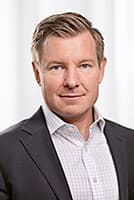
Managed the fund since
2021-06-15
Jan Bjerkeheim
Jan Bjerkeheim is co-portfolio manager of Swedbank Robur Corporate Bond Nordic High Yield, Corporate Bond Europe High Yield and Climate Bond High Yield. He has extensive credit market experience and joined Swedbank Robur in 2021.

Experience and education
He has previously worked as a high-yield asset manager at SEB Investment Management (2018–2021). Prior to this he was employed at Danske Bank (2007–2018) as a lending specialist to large corporates and previously with investment banking in corporate finance and equity analysis.

Jan has an M.Sc. in Business Administration/Major Finance from Stockholm University (2003–2007).

Managed the fund since
2025-01-01
Mathias Westman
Mathias Westman is co-portfolio manager of Swedbank Robur Corporate Bond Nordic High Yield, Corporate Bond Europe High Yield, Climate Bond High Yield, Obligation, Obligation Plus, Förbundsräntefond, Talenten Räntefond Mega and Folksam LO Obligation. He has many years of experience in fixed income and credit trading and joined Swedbank Robur in 2019.

Experience and education
He has previously worked as a credit trader at Swedbank Robur (2019-2024). He has also worked as a fixed income broker at Gottex Brokers (2013-2019) and as an assistant portfolio manager at Naventi Kapitalförvaltning (2012-2013). Prior to that, he worked as a consultant at Holberg Fondene (2012) and began his financial career as an investment adviser at Skandia Norden (2011-2012).

Mathias has studied economics and finance at Linköping University (2008-2011).

Managed the fund since
2022-06-01
Xuli Qian
Xuli Qian is co-portfolio manager of Swedbank Robur Corporate Bond Nordic High Yield, Corporate Bond Europe High Yield and Climate Bond High Yield. She has long and broad experience of the European and Nordic credit market and she joined Swedbank Robur in 2022.

Experience and education
She has previously managed credit funds at SEB Investment Management (2015-2022) where she has also worked as a quantitative analyst (2013-2015). Prior to this, she worked as an analyst at Nordea Markets (2012-2013).

Xuli is a Chartered Financial Analyst, CFA (2018). She has a M.Sc in General Management from Stockholm School of Economics (2011-2013) and a M.Sc in Financial Mathematics from KTH Royal Institute of Technology (2007-2013).
Fixed-income team
The fixed-income team manages funds encompassing everything from traditional money market and bonds to global corporate bond funds within both Investment Grade and High Yield. This means you can find products with exposure across the entire interest-rate spectrum. The fund managers have comprehensive knowledge and extensive experience of the fixed-income and credit markets in both the Nordic and European regions. The team consists of twelve portfolio managers which are divided between fixed income management and credit management.
Fixed-income funds
Our actively managed fixed-income funds apply an investment strategy based on the fund managers’ projected interest rate trend compared with the market’s pricing. The corporate bond funds focus on the selection of companies, but the sector, regional and thematic analyses are also key components of the strategy. All our fixed-income funds possess a clear sustainability profile and our fixed-income fund management is the largest in the Nordic region in terms of investments in green bonds.
Industry
Updated: 29/05/2026
Largest holdings
Updated: 29/05/2026
Credit rating
Average Credit Rating
Rating table aggregated per level
Capital structure rating (HY/IG)
Capital structure fixed/floating rate
Fees
Total fee
1.14 %
Ongoing costs
Of which
Management fee
Transaction costs
Performance based fee
Risk
Risk (SRI)
2 / 7Sharpe ratio 2 y
Standard Deviation 2 y
Active risk 2 y
Fund Facts
Management Company
Share Class
Dividend
ISIN
Base Currency
Share Class Currency
Start date
NAV-price
Asset Under Management
Type
Legal seat
UCITS
Benchmark
NAV Update
PPM-number
Morningstar Rating Total
Sustainability
SFDR Classification
CO₂
Sustainable bonds
Exclusion level
ESG rating
Sustainable Finance Disclosures
Summary
The fund analyses how the sustainable investments affect such things as emissions, water and biodiversity on an ongoing basis. The fund also ensures that the holdings do not seriously and systematically infringe on accepted international standards and conventions relating to sustainability as adopted by the UN, ILO and OECD or are otherwise involved in unacceptable operations relating to sustainability or corporate governance.

When individual securities are assessed as to whether they cause significant harm to any environmental or social goals, the indicators for negative impact on sustainability factors (Principal Adverse Impact, PAI) are taken into consideration. The Management Company analyses PAI indicators that are considered to be able to measure significant harm and has set thresholds for when the PAI indicators are considered to demonstrate such harm. In the cases where limit values are surpassed, the security does not constitute a sustainable investment.

External suppliers will provide Swedbank Robur with an analysis of which companies can be associated with violations of international norms. Based on information from our suppliers and other available information, Swedbank Robur will perform its own assessment on whether it is a question of a serious and systematic violation and in that case refrain from investing in the company and divesting existing holdings. If such a violation is deemed to occur, the company's securities are not a sustainable investment.

The fund's investments consist of sustainable bonds and ordinary bonds, which, according to Swedbank Robur, are sustainable investments in that the issuer's products and services contribute to meeting the UN's Sustainable Development Goals (SDG), also known as the Global Goals. The UN Global Goals address both social and environmental aspects. The fund's investments have a special focus on the UN's environmental goals such as sustainable energy, conservation of the environment and combating climate change.

The fund is managed with the objective of contributing to the achievement of the UN Global Goals. The fund only invests sustainable bonds and regular bonds issued by companies that fulfil Swedbank Robur's definition of sustainable investments in accordance with SFDR. The fund is obligated to follow the Management Company's "Policy for Responsible Investments" (adopted by the Board) and use the three main methods ("include", "exclude" and "engage") in order to achieve the sustainable investment objective of the fund. The Management Company also has "Principles for shareholder engagement" (adopted by the Board). As active owners, Swedbank Robur strives to ensure that the companies in which we invest are managed in an efficient and long-term sustainable way.

The plan is for at least 80% of the fund's assets to consist of investments used to achieve the sustainable investment objective, with at least {PC_AT_BOX_MREL_PRC} focusing on environmental objectives and at least {PC_AT_BOX_SOCIAL_PRC} focusing on social objectives.

The Management Company’s risk function monitors and checks that the fund’s sustainable investment objectives are complied with. The risk function also performs a quarterly follow-up and analysis of the metrics the Management Company has selected to measure how the fund’s investments meet the sustainable investment objectives.

In order to measure the attainment of the sustainable investment objective, the sustainability indicators net-zero target, sustainable bonds, share of bonds in sustainable companies and Environmental Engagement (E) are used.

Swedbank Robur uses several sources in its process to measure how the fund's goals for sustainable investments are achieved. Swedbank Robur purchases data from major data providers that have demonstrated a robust method for guaranteeing the quality of data. In order to guarantee the quality of the data purchased, the supplier's data and product range are reviewed. When there is an opportunity, test data is taken from several providers offering the same product in order to compare as large a selection as possible.

There are a number of limitations with the models and data being currently used. The main limitation is the number of asset allocations for which metric calculation methods exist. The coverage is generally good for the funds, where a mix between reported and estimated data is used. Furthermore, Swedbank Robur believes that the method used by the data provider for estimating data is reliable.

The Management Company has due diligence procedures in place in order to ensure that sustainability risks and the sustainability requirements established for the fund are taken into consideration in the investment decision. Sustainability analysis is an integrated part of the fund management’s investment process. In order to manage sustainability risks and integrate the risks in investment decisions, the fund management follows the procedures that the Management Company describes in the Management Company’s "Strategy to include" and "Strategy to exclude". The Management Company’s risk function performs a daily inspection to determine whether the fund’s holdings fulfil its sustainability requirements and regulations regarding exclusion.

The fund follows the Management Company's "Principles for Shareholder Engagement" (adopted by the Board). In the event of sustainability-related controversies in invested companies, Swedbank Robur has special procedures and processes to monitor and follow up with the company. Both dialogue work and voting are key tools to try to prevent and respond to sustainability-related controversies.